
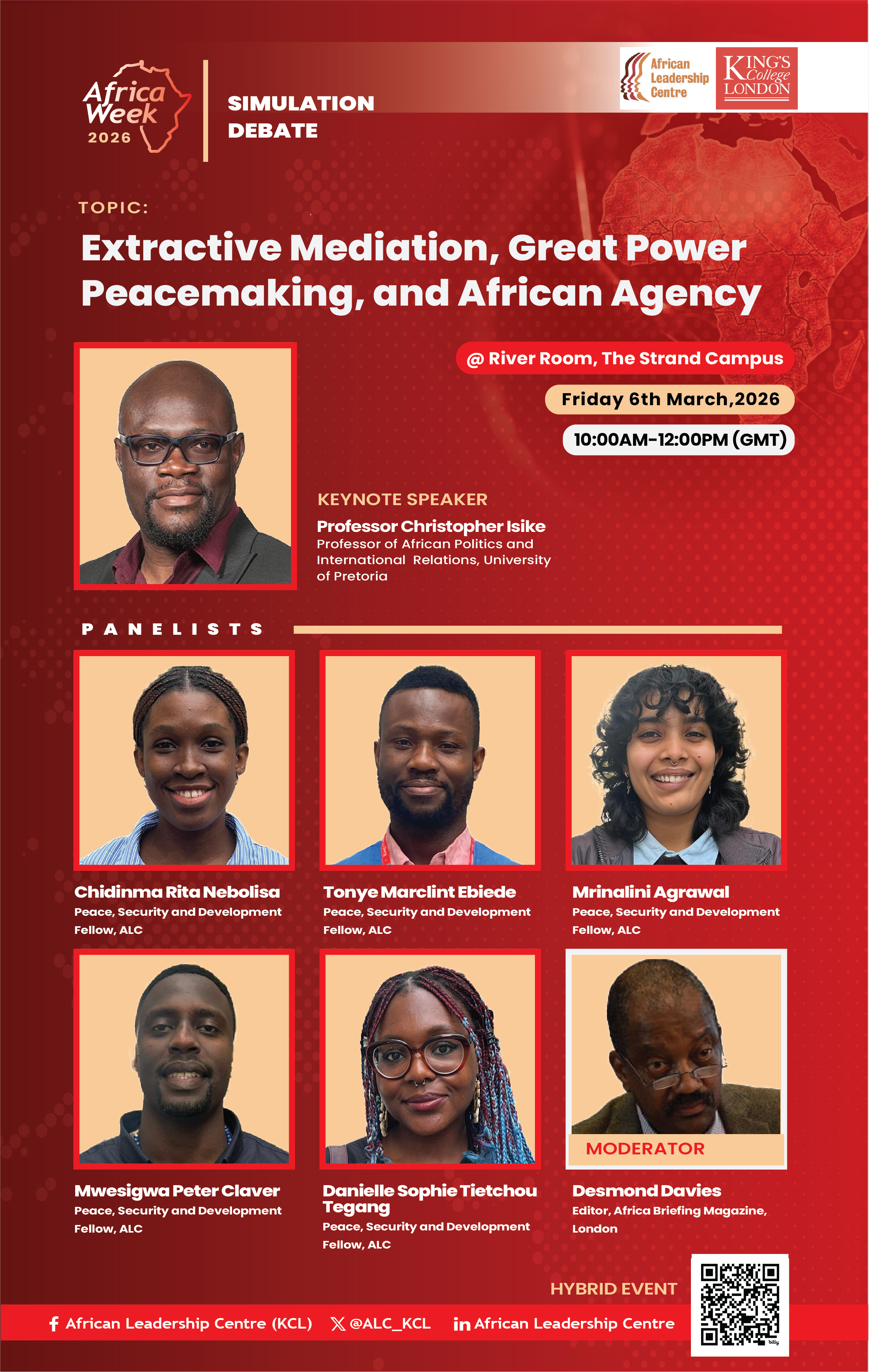
As global geopolitics undergoes profound transformation, the practice of peacemaking is evolving in parallel. One notable recent approach—described by some analysts as “extractive mediation” links conflict resolution efforts to access to critical minerals and strategic economic interests. This model has been prominently deployed in ongoing peacemaking efforts in the Democratic Republic of Congo (DRC) and the wider Great Lakes region.
In this context, the United States has brokered a peace agreement between Rwanda and the DRC, while Qatar has simultaneously pursued a parallel mediation track focused on negotiations between the DRC government and the Rwanda-backed M23 armed group. These initiatives emerged amid the limited effectiveness of African-led regional mechanisms, notably those of the Southern African Development Community (SADC) and the East African Community (EAC), to halt the escalation of violence.
After more than a decade of dormancy, the M23 rebellion re-emerged forcefully in 2021, with widespread and well-documented support from Rwanda. The group rapidly seized significant territory in eastern DRC, including major urban centers such as Goma and Bukavu. In response, the EAC deployed a regional force that succeeded in improving humanitarian access but had limited impact on the broader conflict dynamics. Perceived by the Congolese government as insufficiently neutral and overly accommodating of Rwanda, the mission was prematurely terminated. A subsequent deployment by SADC similarly failed to reverse the conflict’s escalation. While these initiatives generated some humanitarian gains and laid groundwork for subsequent mediation efforts, they did not de-escalate violence or secure mediation breakthroughs.
Keynote Speaker:
Christopher Isike, PhD, is a Professor of African Politics and International Relations and Head of Department of Political Sciences at the University of Pretoria, South Africa. The founding Director of the African Centre for the Study of the United States, University of Pretoria (ACSUS-UP), Professor Isike is also the current President of the African Association of Political Science (AAPS) and a member of the Board of Directors of Global Development Network (GDN). He also sits on the Advisory Board of Society of Gender Professionals (SGP).
Moderator:
Desmond Davies, a Mentor in strategic communication at the African Leadership Centre, King’s College London.
Speakers:
Chidinma Rita Nebolisa is a fellow on the Peace, Security and Development Fellowship for African Scholars at the African Leadership Centre (ALC).
Tonye Marclint Ebiede is a Fellow on the Peace, Security and Development Fellowship for African Scholars at the African Leadership Centre (ALC).
Mrinalini Agrawal Mrinalini Agrawal is a Fellow of the Associate Fellowship in Global Leadership and Peacebuilding for the Global South at the African Leadership Centre (ALC).
Mwesigwa Peter Claver is a Fellow on the Peace, Security and Development Associate Fellowship for Africans at the African Leadership Centre (ALC).
Danielle Sophie Tietchou Tegang is a Fellow on the Peace, Security and Development Associate Fellowship for Africans at the African Leadership Centre (ALC)
Strand Campus, London
London, WC2B 4BG
United Kingdom